Can Repointing Stop Damp?
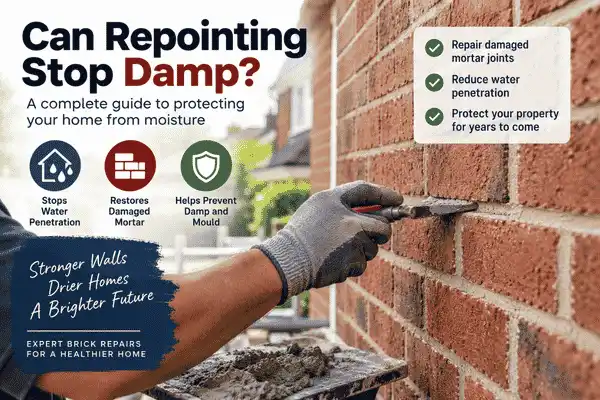
Yes, brick repointing can stop damp if damaged or missing mortar joints are allowing rainwater to enter the walls. However, repointing is not a cure for every type of damp. Problems such as rising damp, leaking pipes, roof defects, or condensation require different solutions. A professional inspection is the best way to identify the true cause of moisture.
Damp is one of the most common problems homeowners face in the UK. It can damage plaster, cause mould growth, weaken brickwork, and reduce indoor comfort.
Many people assume damp always starts inside the house. In reality, it often begins outside when damaged mortar allows rainwater to penetrate brick walls.
This is why brick repointing is frequently recommended as part of damp repair. But it is important to understand when it works and when it doesn’t.
Brick repointing is the process of removing old, cracked, or deteriorated mortar from between bricks and replacing it with fresh mortar.
Mortar acts as the first line of defence against weather. Over time, rain, frost, pollution, and temperature changes cause it to break down.
When mortar fails, water can enter small gaps in the brickwork and gradually travel into the wall.
Replacing damaged mortar restores the wall’s weather resistance and helps keep moisture out.
Damp refers to unwanted moisture inside a building.
It may appear as:
Damp is not a problem on its own.
It is usually a symptom of another issue that needs to be identified and repaired.
Yes.
Mortar fills the joints between bricks and helps prevent rainwater from entering the wall.
When mortar begins to crumble, small gaps appear.
These openings allow rainwater to soak into the masonry during wet weather.
Once moisture enters the wall, it can slowly migrate indoors, especially if the brickwork remains wet for long periods.
This type of moisture is known as penetrating damp.
Brick walls are constantly exposed to rain.
Healthy mortar sheds water away from the building.
Damaged mortar cannot perform this job effectively.
The process usually happens like this:
Repairing the mortar stops this pathway and helps prevent further water penetration.
Brick repointing is most effective for penetrating damp.
This occurs when rainwater enters through defects in the external wall.
Common causes include:
By sealing these openings, repointing helps prevent water entering the building.
Not every damp problem is caused by damaged brickwork.
Repointing alone will not solve:
This occurs when moisture travels upward from the ground through masonry.
It usually requires investigation of the damp-proof course (DPC) and other specialist repairs.
Condensation forms when warm indoor air meets cold surfaces.
Improving ventilation, insulation, and heating is normally more effective than repointing.
Burst pipes, leaking radiators, or faulty plumbing can all create damp patches.
Repairing the water leak is the priority.
Broken roof tiles, damaged flashing, or blocked gutters often allow water into walls.
Roof repairs should be completed before considering brick repointing.
Several warning signs suggest that deteriorating mortar may be responsible.
Look for:
These signs indicate that the wall may no longer be weatherproof.
Winter weather places extra stress on brickwork.
Heavy rain increases moisture levels.
Freezing temperatures cause trapped water to expand.
This freeze-thaw cycle gradually breaks down mortar and enlarges existing cracks.
As a result, homes often experience worsening damp problems during colder months.
Regular maintenance helps reduce this risk.
Not always.
A professional inspection determines whether the damage is localised or widespread.
Examples include:
Suitable when only one wall or chimney has deteriorated mortar.
Recommended when mortar is failing across multiple elevations of the property.
Repairing only visibly damaged areas may not solve widespread moisture problems if other sections of mortar have also deteriorated.
Damp can have several causes at the same time.
For example, a property may have damaged mortar and leaking gutters.
A professional inspection helps identify:
Treating the correct cause avoids unnecessary expense and prevents repeat problems.
Brick repointing restores the protective barrier that keeps rainwater out of masonry.
When mortar joints are repaired correctly, water is less likely to penetrate the wall. This helps keep bricks, insulation, and internal plaster drier during wet weather.
Repointing also reduces the amount of moisture trapped inside the wall, lowering the risk of frost damage, mould growth, and further deterioration.
Although no external wall is completely waterproof, well-maintained mortar significantly improves a building’s resistance to rain.
Professional repointing involves more than simply filling visible cracks. Each stage is important for achieving a long-lasting repair.
The contractor checks the condition of the mortar, bricks, chimney, and surrounding masonry.
The inspection also helps identify whether damp is actually entering through the brickwork.
Old mortar is carefully removed using specialist tools.
Only the deteriorated mortar is removed, helping preserve the surrounding bricks.
Dust, loose material, and debris are cleaned from the joints.
Clean joints allow the new mortar to bond properly.
The new mortar should match the existing mortar in both strength and appearance.
Many older UK homes require lime mortar because it allows moisture to evaporate naturally.
Using mortar that is too hard can damage historic brickwork.
Fresh mortar is packed firmly into each joint.
The joints are then shaped to match the original finish of the property.
New mortar needs time to cure gradually.
Very hot weather, frost, or heavy rain can affect the curing process.
Professional contractors protect newly pointed walls until the mortar has hardened properly.
Once curing is complete, the wall is inspected to ensure all joints have been filled correctly and the repair provides a consistent finish.
Repointing offers several long-term benefits when damaged mortar is the source of moisture.
Fresh mortar seals gaps that allow water into the wall.
Dry brickwork is less likely to suffer frost damage, cracking, or surface deterioration.
Reducing moisture entering the wall lowers the risk of damaged plaster, peeling paint, and mould growth.
Maintaining mortar helps preserve the overall strength and appearance of the building.
Newly pointed brickwork often makes a property look cleaner and better maintained.
The cost of repointing varies because every property is different.
Several factors affect the final price.
| Factor | Impact on Cost |
|---|---|
| Size of the property | Larger areas require more labour and materials. |
| Extent of mortar damage | Widespread deterioration increases repair time. |
| Building height | Scaffolding is often needed for taller properties. |
| Type of mortar | Lime mortar may require specialist skills. |
| Ease of access | Difficult-to-reach walls take longer to repair. |
| Brick condition | Damaged bricks may also need replacing. |
A professional survey provides the most accurate quotation based on the property’s condition.
No.
Damp-proof paint only covers the visible signs of moisture.
If rainwater continues entering through damaged mortar, the underlying problem remains.
Repointing addresses the source of penetrating damp by repairing the external wall.
Decorative coatings should only be applied after the masonry has been repaired and allowed to dry.
It can help if mould is caused by penetrating damp.
When water stops entering the wall, the affected area has a chance to dry out.
However, mould caused by condensation usually requires improved ventilation, better insulation, or changes to indoor humidity levels.
Identifying the cause of mould is essential before deciding on repairs.
Many damp problems become more expensive because simple issues are ignored.
Small mortar cracks become larger over time.
Early repairs are usually quicker and less costly.
Not every damp problem requires repointing.
Correct diagnosis saves both time and money.
Older buildings often require lime mortar.
Using modern cement mortar on historic brickwork can trap moisture and damage bricks.
Blocked gutters and damaged roof coverings often contribute to damp.
External drainage should always be checked alongside brickwork.
Poorly applied mortar may crack prematurely or fail to keep water out.
Choosing experienced masonry specialists helps ensure lasting repairs.
Consider arranging an inspection if you notice:
Early inspection often prevents more extensive repairs later.
Every damp problem is different, which is why identifying the cause is the first step.
Brick Repointing Experts inspect the condition of your mortar, brickwork, and external walls to determine whether deteriorating joints are allowing water to enter the property. Where repointing is the correct solution, they use appropriate materials and repair techniques that match the age and construction of the building.
Homeowners may also benefit from related services, including:
These services help maintain the appearance and long-term durability of brick buildings.
Brick repointing is one of the most effective ways to stop penetrating damp caused by deteriorated mortar. By replacing damaged joints, repointing restores the wall’s ability to resist rainwater and helps protect both the brickwork and the interior of the property.
However, repointing is not a universal solution for every damp problem. Rising damp, condensation, plumbing leaks, and roof defects require different repairs. The key is to identify the true source of moisture before any work begins.
If you notice crumbling mortar, damp patches after rain, or signs of water entering your walls, a professional inspection can determine whether repointing is the right solution. Addressing the problem early helps protect your home, preserve its value, and avoid more expensive repairs in the future.
Brick repointing can completely stop penetrating damp if damaged mortar joints are the only route through which rainwater is entering the building. However, it will not solve damp caused by condensation, rising damp, plumbing leaks, or roof defects. A professional inspection helps identify the correct cause before repairs begin.
Damp caused by brickwork often appears after periods of heavy rain. You may notice wet patches on internal walls, peeling paint, crumbling plaster, or white salt deposits. Outside, look for cracked mortar, missing joints, or damaged bricks. These signs suggest rainwater may be entering through the masonry.
Yes. When water enters through damaged mortar, moisture can build up inside walls. If the affected area remains damp for long periods, mould may develop. Removing the source of water through repointing can help reduce mould caused by penetrating damp, although existing mould may also require treatment.
A professionally completed repointing job can last for several decades. The exact lifespan depends on the quality of workmanship, the type of mortar used, local weather conditions, and how well the property is maintained. Regular inspections help identify minor issues before they become major repairs.
It depends on the condition of the mortar. If only one section of brickwork has deteriorated, localised repointing may be enough. If mortar joints are failing across multiple elevations, full repointing often provides a more effective long-term solution.
Repointing does not significantly increase the insulation value of a wall. However, sealing gaps in deteriorated mortar can reduce unwanted air and water penetration, helping the building perform more efficiently and improving indoor comfort.
Yes, if damaged mortar is the cause of damp. Waterproof paint only hides the visible symptoms, while repointing repairs the route through which water enters the wall. Addressing the underlying problem usually provides a more durable solution.
No, but many older UK buildings were originally constructed using lime mortar. Lime mortar is more flexible than modern cement mortar and allows moisture to evaporate naturally. Matching the replacement mortar to the existing construction helps protect older brickwork from damage.
Ignoring deteriorated mortar allows more rainwater to enter the wall over time. This can lead to damp patches, mould growth, loose bricks, frost damage, and, in severe cases, structural deterioration. Early repairs are usually more straightforward and cost-effective.
Repointing repairs mortar joints rather than damaged bricks. If cracks are limited to the mortar, repointing may solve the problem. If bricks themselves are cracked or the wall is moving, additional repairs may be necessary.