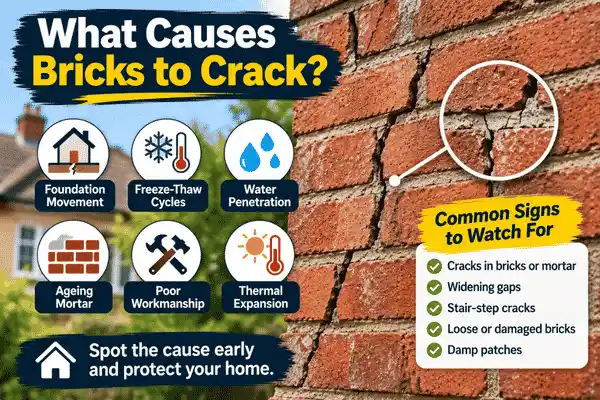
What Causes Bricks to Crack?

Bricks can crack because of foundation movement, moisture, freeze-thaw cycles, ageing mortar, thermal expansion, poor workmanship, or excessive structural loads. While some hairline cracks are harmless, wider or growing cracks may indicate an underlying problem that requires professional attention. Identifying the cause is the first step towards choosing the correct repair. Why do Bricks Crack?… Continue reading What Causes Bricks to Crack?

Can Pressure Washing Damage Bricks?
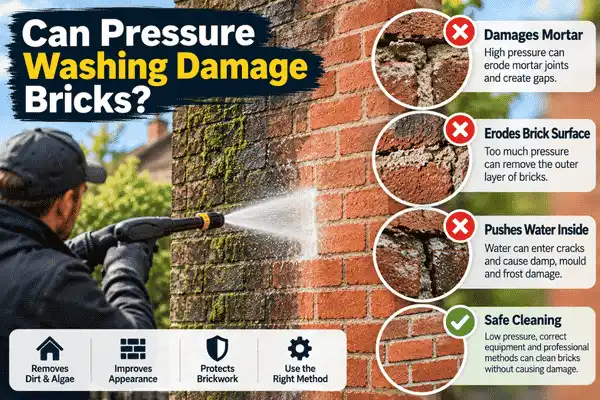
Yes, pressure washing can damage bricks if the pressure is too high or the wrong cleaning method is used. It can erode mortar joints, remove the protective surface of bricks, force water into the wall, and shorten the life of your brickwork. Older properties and historic buildings are particularly vulnerable. Why do Homeowners Pressure Wash… Continue reading Can Pressure Washing Damage Bricks?
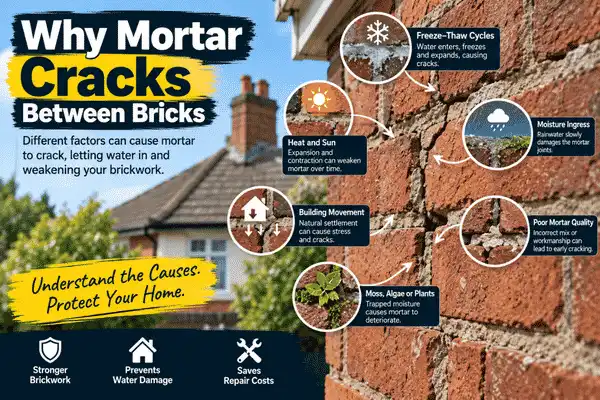
Why Mortar Cracks Between Bricks

Mortar cracks between bricks because of weather exposure, moisture, natural building movement, ageing, or poor workmanship. While small cracks may seem harmless, they can allow water into the brickwork, leading to damp, loose bricks, and more costly repairs if left untreated. Why Does Mortar Crack? Mortar is designed to hold bricks together while allowing slight… Continue reading Why Mortar Cracks Between Bricks

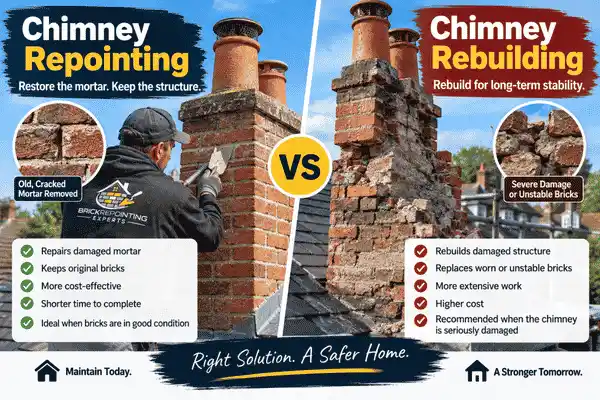
Chimney Repointing vs Chimney Rebuilding: What’s the Difference?

Chimney repointing repairs damaged mortar joints while keeping the existing bricks. Chimney rebuilding involves taking down part or all of the chimney and rebuilding it with new or reusable bricks. If the bricks are still in good condition, repointing is usually enough. If the chimney has become unstable or badly damaged, rebuilding may be the… Continue reading Chimney Repointing vs Chimney Rebuilding: What’s the Difference?

What is the Best Time of Year for Brick Repointing?

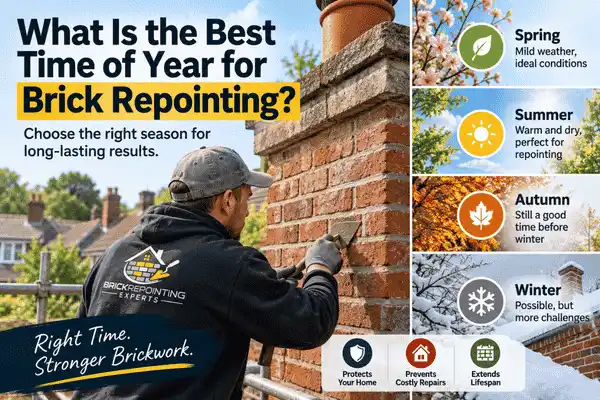
Brick repointing can be carried out throughout much of the year, but spring and early autumn generally provide the best conditions. Mild temperatures allow the mortar to cure properly, reducing the risk of cracking or poor adhesion. Very hot, freezing, or extremely wet weather can affect the quality of the finished work. Why Does the… Continue reading What is the Best Time of Year for Brick Repointing?

How Often Should a Chimney Be Repointed?

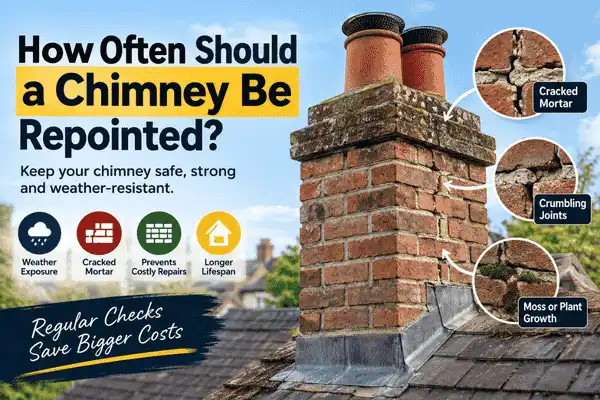
A chimney should be repointed when the mortar joints begin to crack, crumble, or fall out rather than after a fixed number of years. Most well-built chimneys can last for decades, but exposure to rain, frost, wind, and changing temperatures means regular inspections are essential to identify problems early. Why Does a Chimney Need Repointing?… Continue reading How Often Should a Chimney Be Repointed?

How to Spot Early Signs of Brickwork Damage

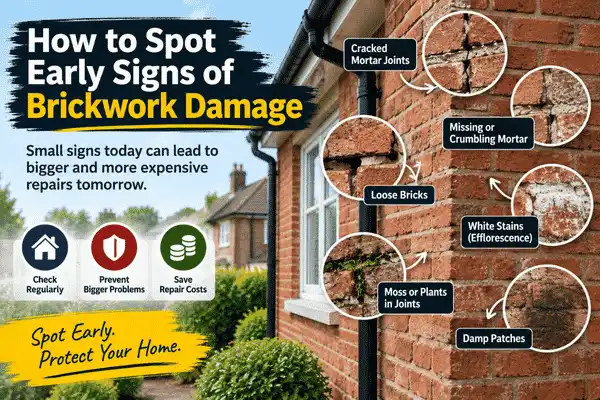
Damaged brickwork often starts with small warning signs such as cracked mortar, loose bricks, damp patches, or white stains on the wall. Spotting these problems early can prevent more serious structural damage and reduce repair costs. Regular inspections help keep your brickwork strong, safe, and weather-resistant. Why is It Important to Check Brickwork Regularly? Brickwork… Continue reading How to Spot Early Signs of Brickwork Damage

Signs Your House Needs Brick Repointing

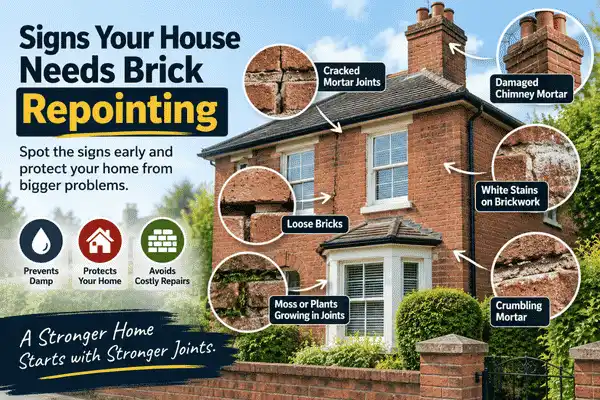
Cracked mortar, loose bricks, damp patches, and gaps between bricks are common signs that your house needs brick repointing. Repairing damaged mortar early helps prevent water penetration, protects your brickwork, and helps you avoid more expensive repairs in the future. Why is Brick Repointing Important? Mortar is the material that holds bricks together and seals… Continue reading Signs Your House Needs Brick Repointing

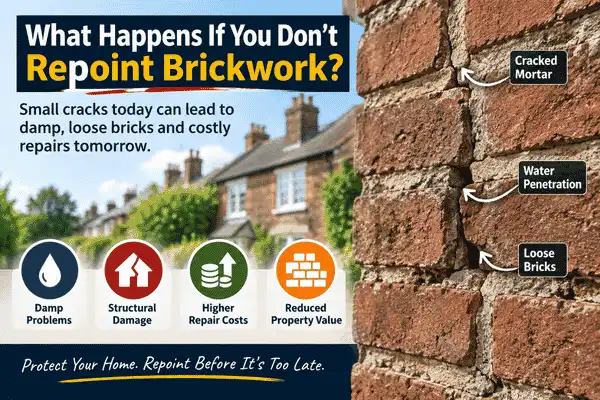
What Happens If You Don’t Repoint Brickwork?

What Happens If You Don’t Repoint Brickwork? Ignoring damaged mortar can allow water to enter your brickwork, leading to damp, loose bricks, frost damage, and more expensive repairs over time. Repointing restores the mortar joints before these problems become more serious and helps protect the structure and appearance of your property. Mortar joints naturally wear… Continue reading What Happens If You Don’t Repoint Brickwork?

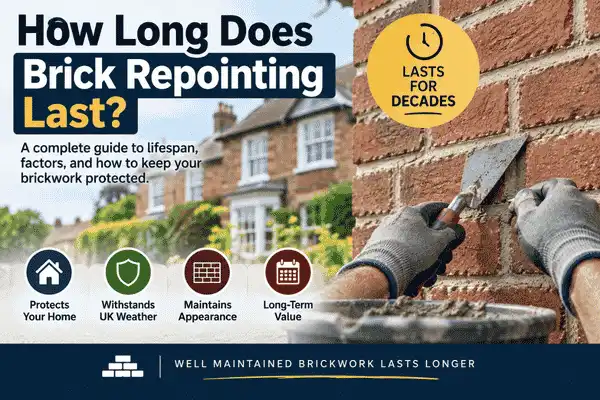
How Long Does Brick Repointing Last?

Professional brick repointing can last for several decades when the correct mortar is used and the work is carried out properly. The actual lifespan depends on factors such as the type of mortar, weather exposure, workmanship, and ongoing maintenance. Regular inspections help identify small problems before they become expensive repairs. Brick repointing is an investment… Continue reading How Long Does Brick Repointing Last?

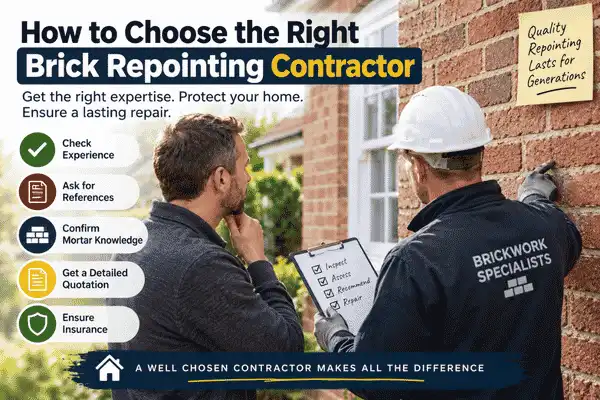
How to Choose the Right Brick Repointing Contractor

Choosing the right brick repointing contractor can prevent poor workmanship, damaged bricks, and unnecessary repair costs. Look for experience with your type of property, suitable mortar knowledge, clear written quotations, proper preparation, and safe working practices. Do not choose a contractor based only on the lowest price. The quality of the repair matters just as… Continue reading How to Choose the Right Brick Repointing Contractor

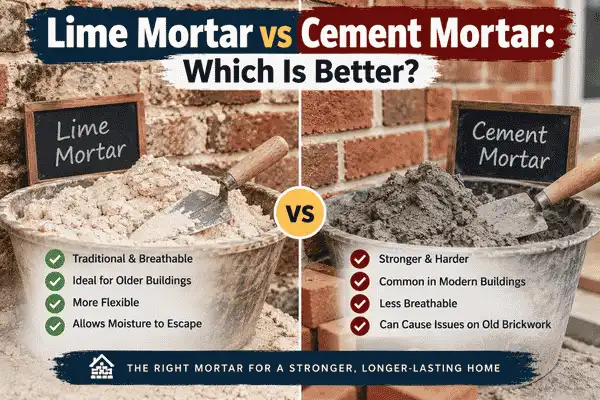
Lime Mortar vs Cement Mortar: Which is Better?

Lime mortar and cement mortar are not interchangeable. Lime mortar is usually better suited to older brick buildings because it is softer and allows moisture to escape, while cement mortar is commonly used on modern masonry. Choosing the wrong mortar can damage bricks, especially on older properties. What is lime mortar? Lime mortar is made… Continue reading Lime Mortar vs Cement Mortar: Which is Better?

Can Repointing Stop Damp?

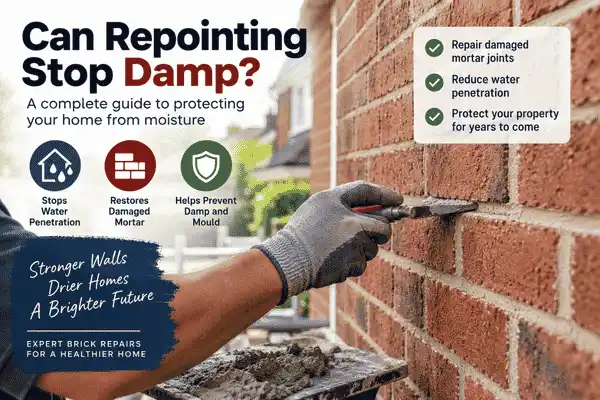
Yes, brick repointing can stop damp if damaged or missing mortar joints are allowing rainwater to enter the walls. However, repointing is not a cure for every type of damp. Problems such as rising damp, leaking pipes, roof defects, or condensation require different solutions. A professional inspection is the best way to identify the true… Continue reading Can Repointing Stop Damp?

Brick Repointing vs Tuckpointing: What’s the Difference?

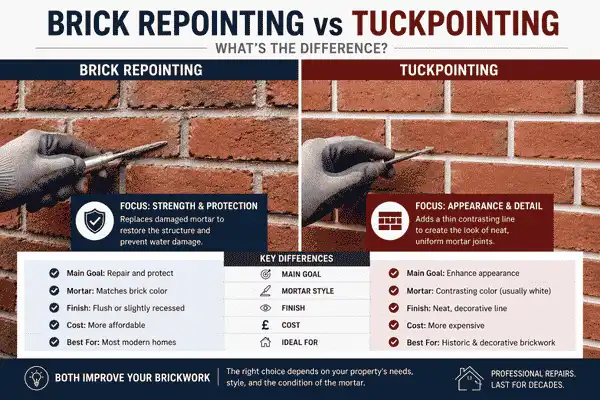
Brick repointing and tuckpointing are often confused because both involve repairing mortar joints. The main difference is their purpose. Repointing replaces damaged mortar to strengthen brickwork and stop water damage, while tuckpointing improves the appearance of brick walls by creating the illusion of fine, even joints. Knowing which service your property needs can save money… Continue reading Brick Repointing vs Tuckpointing: What’s the Difference?

Is It Expensive to Repoint Bricks?

Repointing bricks can seem expensive at first, but it is usually much cheaper than replacing damaged brickwork or rebuilding a wall. The total cost depends on the size of the property, the condition of the mortar, accessibility, scaffold requirements, and the type of mortar used. For many UK homeowners, repointing is a worthwhile investment because… Continue reading Is It Expensive to Repoint Bricks?

How Much Does Brick Repointing Cost in the UK?

The average brick repointing cost in the UK is between £50 and £60 per m² for standard brickwork. Most homeowners pay £1,500-£2,200 to repoint one side of a house, while a full semi-detached property typically costs £4,000-£5,000. The final price depends on the size of the property, access, mortar type, and the condition of the… Continue reading How Much Does Brick Repointing Cost in the UK?