How to Spot Early Signs of Brickwork Damage
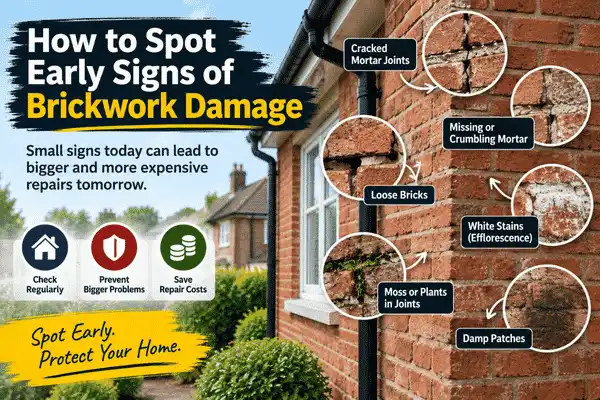
Damaged brickwork often starts with small warning signs such as cracked mortar, loose bricks, damp patches, or white stains on the wall. Spotting these problems early can prevent more serious structural damage and reduce repair costs. Regular inspections help keep your brickwork strong, safe, and weather-resistant.
Brickwork is constantly exposed to rain, frost, wind, and changing temperatures. Over time, these conditions can weaken both the bricks and the mortar.
A simple visual inspection once or twice a year can help you identify minor issues before they become major repairs.
Small cracks in mortar are one of the first signs of deterioration. These cracks allow water to enter the wall, which can lead to further damage during freezing weather.
If mortar is falling out or gaps appear between bricks, the wall is losing its protection against moisture and movement.
Bricks should remain firmly in place. If a brick moves when gently pressed, it may indicate failing mortar or structural movement.
White powdery deposits, called efflorescence, appear when moisture carries natural salts to the surface. Although the stains are usually harmless, they often indicate excess moisture within the wall.
Dark patches on external brickwork or damp areas inside your home can suggest that water is entering through damaged mortar joints.
Bricks that are chipped, cracked, or flaking may have been damaged by frost or prolonged moisture exposure.
Vegetation growing between bricks usually indicates trapped moisture and deteriorating mortar.
A wall that appears bowed or uneven should never be ignored. This may indicate movement within the brickwork and requires a professional inspection.
Common causes include:
Understanding the cause helps ensure the correct repair is carried out.
Walk around your property and check:
Use binoculars to inspect high areas instead of climbing onto the roof.
Arrange an inspection if you notice:
Early repairs are often simpler and less expensive than extensive restoration work.
Brick Repointing Experts inspect brickwork, identify the cause of deterioration, and recommend the most suitable repair solution. Whether your property requires brick repointing, brickwork repairs, chimney repointing, or brick restoration, timely repairs help protect your home from further damage.
Spotting brickwork damage early can save you time, money, and unnecessary repairs. Small issues such as cracked mortar, loose bricks, or damp patches often worsen if ignored. Regular inspections and prompt maintenance help keep your property safe, weather-resistant, and in excellent condition for years to come.
Inspect your brickwork at least once a year and after severe weather to identify early signs of damage.
Not always. Small surface cracks may only affect individual bricks, but larger cracks or multiple damaged bricks should be inspected by a professional.
Yes. Missing or cracked mortar allows water to enter the wall, which can eventually damage the surrounding bricks.
No. Some problems may only need local repairs or brick replacement. A professional inspection will determine the most appropriate solution.
Regular inspections, good drainage, prompt repairs, and maintaining gutters and roofs all help reduce the risk of brickwork deterioration.