How Often Should a Chimney Be Repointed?
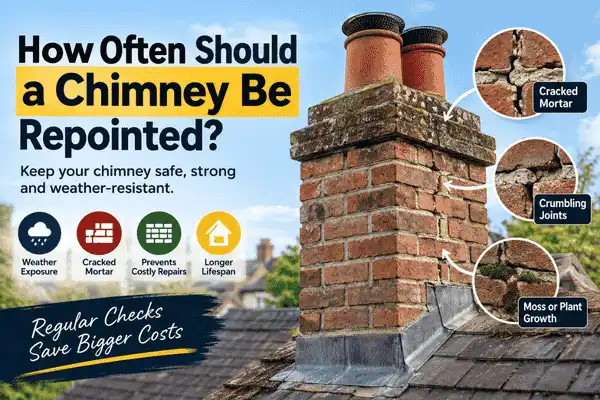
A chimney should be repointed when the mortar joints begin to crack, crumble, or fall out rather than after a fixed number of years. Most well-built chimneys can last for decades, but exposure to rain, frost, wind, and changing temperatures means regular inspections are essential to identify problems early.
A chimney is one of the most exposed parts of a property. Unlike external walls, it faces constant weather from every direction.
Over time, the mortar between the bricks gradually deteriorates. Once the joints begin to fail, water can enter the chimney, increasing the risk of damp, frost damage, and loose bricks.
Repointing replaces the damaged mortar and helps restore the chimney’s weather resistance.
Rather than waiting for a certain number of years, inspect your chimney at least once a year.
It’s also a good idea to check it:
Regular inspections help identify small problems before they become expensive repairs.
Small cracks allow rainwater to enter the joints and usually become worse over time.
Gaps between bricks reduce the chimney’s ability to resist moisture and weather.
If bricks begin to move, deteriorated mortar is often the cause.
Water entering through damaged mortar may eventually appear inside your home.
Pieces of mortar on the roof, gutters, or ground indicate that the joints are deteriorating.
Vegetation growing in the joints usually means moisture is trapped inside the masonry.
Several factors influence the lifespan of mortar, including:
Older chimneys built with lime mortar may require different repair methods than modern brickwork.
Ignoring damaged mortar can lead to:
Repairing mortar early is usually more affordable than rebuilding damaged sections of the chimney.
Yes.
If deterioration is limited to one area, localised repointing may be enough.
However, if mortar has failed across most of the chimney, full repointing usually provides a longer-lasting solution.
A professional inspection will determine the best option.
Brick Repointing Experts inspect chimney brickwork, assess the condition of the mortar joints, and recommend the most suitable repair. Whether your chimney needs local mortar repairs or complete chimney repointing, using compatible materials and proven techniques helps protect your property from future weather damage.
There is no fixed schedule for chimney repointing, but regular inspections are the best way to protect your property. Cracked or missing mortar should be repaired as soon as it is noticed to prevent water damage, loose bricks, and more costly repairs. Keeping your chimney well maintained helps extend its lifespan and protects the rest of your home.
Yes. Most chimneys only require repointing when the bricks remain in good condition. Rebuilding is usually necessary only if the brickwork has become structurally unstable.
It can stop water entering through damaged mortar joints. However, leaks caused by damaged flashing or roofing materials will require separate repairs.
Because chimneys are located at roof level, repointing should be carried out using appropriate access equipment and safe working practices.
Look for cracked or missing mortar, loose bricks, damp around the chimney breast, or pieces of mortar falling from the chimney.
Yes. Water entering cracked mortar expands when it freezes, causing the joints to deteriorate more quickly.