Chimney Repointing vs Chimney Rebuilding: What’s the Difference?
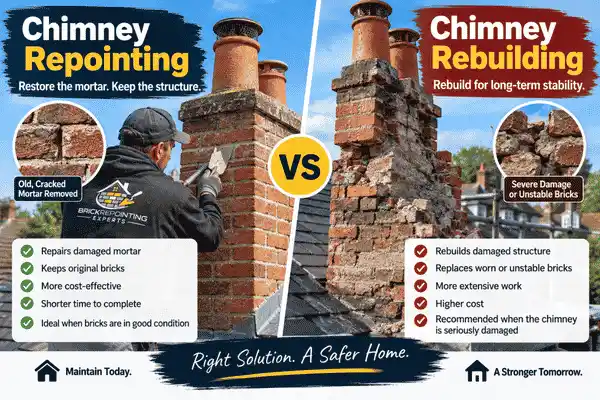
Chimney repointing repairs damaged mortar joints while keeping the existing bricks. Chimney rebuilding involves taking down part or all of the chimney and rebuilding it with new or reusable bricks. If the bricks are still in good condition, repointing is usually enough. If the chimney has become unstable or badly damaged, rebuilding may be the safer option.
Many homeowners assume every damaged chimney needs rebuilding. In reality, most chimneys only require repointing because the mortar wears out faster than the bricks.
Understanding the difference can help you avoid unnecessary work and choose the most suitable repair.
Chimney repointing involves removing old, damaged mortar from between the bricks and replacing it with fresh mortar.
The existing bricks remain in place if they are structurally sound.
Repointing helps:
It is a repair rather than a replacement.
Chimney rebuilding is a more extensive repair.
Part or all of the chimney is dismantled before being rebuilt using suitable bricks and fresh mortar.
Rebuilding is usually recommended when the chimney has suffered significant structural damage or when large sections of brickwork have failed.
| Feature | Chimney Repointing | Chimney Rebuilding |
|---|---|---|
| Main purpose | Repair mortar joints | Rebuild damaged chimney |
| Existing bricks | Usually retained | Damaged bricks replaced |
| Cost | Generally lower | Usually higher |
| Time required | Often quicker | Takes longer |
| Structural damage | Suitable for minor deterioration | Suitable for severe damage |
| Property disruption | Less disruption | More extensive work |
Repointing is usually suitable when you notice:
Replacing the mortar early helps prevent further deterioration.
Rebuilding may be necessary if the chimney has:
A professional inspection can determine whether rebuilding is required.
Ignoring chimney problems can lead to:
Addressing problems early usually reduces repair costs.
A contractor will inspect:
This assessment helps determine whether repointing or rebuilding is the safest solution.
Brick Repointing Experts inspect chimney brickwork and recommend the most appropriate repair based on its condition. Whether your chimney requires repointing, brick replacement, or partial rebuilding, the correct repair helps protect your property from weather damage and extends the life of the chimney.
Chimney repointing and chimney rebuilding solve different problems. If the bricks are in good condition and only the mortar has deteriorated, repointing is usually the most suitable solution. When the chimney has become unstable or the brickwork is badly damaged, rebuilding may be necessary. A professional inspection helps identify the right repair, preventing further damage and protecting your home for the future.
In most cases, yes. Repointing repairs the mortar while keeping the existing bricks, making it a less extensive and generally less expensive repair.
Yes. If only the top section is damaged, a partial rebuild may be sufficient instead of rebuilding the entire chimney.
A professional inspection will assess the condition of both the mortar and the bricks. If only the mortar has deteriorated, repointing is often enough. If the brickwork is unstable, rebuilding may be recommended.
Yes. Replacing deteriorated mortar restores the strength of the joints and improves the chimney’s resistance to weather.
A visual inspection once a year and after severe storms helps identify problems before they become serious.