How Long Does Brick Repointing Last?
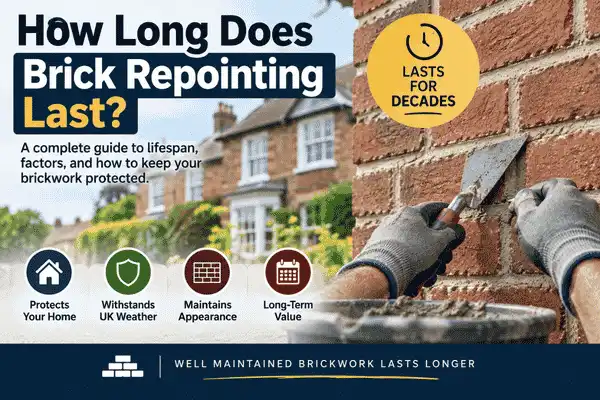
Professional brick repointing can last for several decades when the correct mortar is used and the work is carried out properly. The actual lifespan depends on factors such as the type of mortar, weather exposure, workmanship, and ongoing maintenance. Regular inspections help identify small problems before they become expensive repairs.
Brick repointing is an investment in the long-term health of your property. Replacing damaged mortar not only improves the appearance of brickwork but also protects it from water penetration and structural deterioration.
Many homeowners ask the same question before arranging repairs:
“How long will brick repointing last?”
The answer depends on several factors, including the quality of the original work, the condition of the bricks, the mortar used, and the environment surrounding the building.
Brick repointing is the process of removing worn or damaged mortar from between bricks and replacing it with fresh mortar.
Mortar acts as a protective barrier. It keeps rainwater out, supports the brickwork, and allows the wall to perform as designed.
Over time, weather and age cause mortar to crack, crumble, or fall away. Repointing restores these joints and helps extend the life of the wall.
There is no single lifespan for every building.
A well-executed repointing project can protect brickwork for many decades, provided the correct materials are used and the property is maintained.
The lifespan depends on:
A property exposed to driving rain and frost may require attention sooner than one in a sheltered location.
Several factors influence the durability of new mortar.
Proper preparation is essential.
Old mortar must be removed carefully, joints cleaned thoroughly, and fresh mortar compacted correctly.
Poor workmanship often leads to early cracking or gaps that allow water to enter.
The replacement mortar should match the building.
Many traditional UK homes perform best with lime mortar, while many modern buildings use cement-based mortar.
Using incompatible mortar can shorten the life of both the mortar and the surrounding bricks.
Brickwork is constantly exposed to:
Repeated wetting and drying gradually wear down mortar joints over time.
Properties in exposed coastal or high-rainfall areas may experience faster deterioration.
All buildings move slightly as temperatures change.
Small amounts of movement are normal.
Suitable mortar allows for this movement without causing unnecessary stress to the brickwork.
Simple maintenance helps extend the life of repointing.
Keeping gutters clear, repairing roof leaks quickly, and checking brickwork each year can prevent unnecessary water damage.
Neither mortar is automatically longer-lasting.
Each performs best when used on the right type of building.
| Lime Mortar | Cement Mortar |
|---|---|
| Often suitable for traditional buildings | Commonly used on modern buildings |
| Flexible and breathable | Harder and denser |
| Helps older brickwork manage moisture | Suitable for many modern construction methods |
| Should match historic masonry | Should match modern masonry |
Choosing the correct mortar is usually more important than choosing the strongest mortar.
Yes. Even new mortar can fail if the work is not carried out correctly.
Common causes include:
These problems may allow water to enter long before the repair should require attention.
Brickwork should be inspected regularly for signs of deterioration.
Common warning signs include:
Early repairs are often simpler and less expensive than waiting until widespread damage develops.
Yes. Victorian, Georgian, Edwardian, and other traditional properties often benefit from regular inspections.
Older brickwork may use lime mortar, which naturally weathers over time.
Regular maintenance allows small repairs to be completed before larger sections require repointing.
Yes. Mortar protects bricks from weather exposure.
Replacing deteriorated mortar helps prevent water entering the wall, reducing the risk of frost damage, loose bricks, and long-term structural problems.
In many cases, timely repointing helps preserve the original brickwork for many years.
Good workmanship is only part of the equation. Regular maintenance plays an important role in extending the life of your brickwork.
Simple checks each year can prevent small issues from turning into costly repairs.
Here are some practical ways to keep your repointing in good condition.
Walk around your property at least once a year.
Look for:
Spotting these problems early allows repairs to be made before water causes further damage.
Blocked gutters are one of the most common causes of water damage to brick walls.
Overflowing rainwater keeps brickwork wet for long periods, speeding up mortar deterioration.
Cleaning gutters regularly helps protect newly repointed walls.
Broken roof tiles, damaged flashing, and leaking valleys can direct water onto brickwork.
Even high-quality repointing cannot perform properly if large amounts of water constantly run down the wall.
High-pressure washing can damage mortar joints and softer bricks.
If brickwork needs cleaning, use methods suitable for the age and condition of the property.
Climbing plants, moss, and small weeds may trap moisture against the wall.
Roots can also grow into weakened mortar joints.
Keeping vegetation under control helps brickwork dry naturally after rain.
Many repointing problems are caused by avoidable mistakes.
Using mortar that is too hard for traditional brickwork can place stress on older bricks.
The replacement mortar should always be compatible with the existing masonry.
Hairline cracks may seem harmless, but they allow water to enter the wall.
Small repairs completed early often prevent larger repointing projects later.
Poor workmanship can lead to:
Choosing an experienced repointing specialist improves the chances of a long-lasting repair.
Many homeowners wait until mortar begins falling from the wall.
Regular inspections usually identify problems much earlier, reducing repair costs.
Yes.
The UK’s climate exposes brickwork to constant changes in temperature and moisture.
Common weather-related factors include:
Over time, these conditions naturally wear down mortar joints.
Properties in coastal or exposed locations often require more frequent inspections because wind-driven rain places additional stress on brickwork.
Most homes benefit from a visual inspection once a year.
You should also inspect brickwork after:
These inspections help identify mortar damage before it develops into larger structural issues.
Repointing should only be carried out when the existing mortar has deteriorated enough to affect the wall.
You may need another inspection if you notice:
A professional survey will determine whether local repairs are enough or whether larger sections need repointing.
For many homeowners, yes.
Well-maintained mortar helps protect the entire structure of the building.
Benefits include:
Repairing mortar before major deterioration occurs is usually more cost-effective than rebuilding damaged brickwork.
Knowing when to repoint is just as important as knowing how long it should last.
Brick Repointing Experts inspect the condition of your brickwork, identify deteriorating mortar joints, and recommend suitable repairs based on your property’s age and construction. Whether your home requires localised repointing or more extensive restoration, using compatible materials and proven techniques helps maximise the lifespan of the repair.
Related services include:
These simple steps can help your repointing perform well for many years.
Brick repointing is a long-term investment in the health and appearance of your property. When the correct mortar is used and the work is carried out by experienced professionals, repointing can protect brickwork for many decades.
The best way to maximise its lifespan is through regular inspections, prompt maintenance, and using materials that match the original construction of the building. Ignoring small cracks or damaged joints can allow water to enter the wall, leading to more extensive repairs later.
If you are unsure about the condition of your brickwork, Brick Repointing Experts can inspect your property, assess the condition of the mortar, and recommend the most appropriate repair solution. Early action helps preserve your home’s structure, improve its weather resistance, and avoid unnecessary repair costs in the future.
There is no fixed schedule for repointing. Most properties only need repointing when the mortar has deteriorated significantly. A visual inspection every year helps identify problems early and prevents unnecessary repairs.
Yes. Professionally completed repointing using suitable mortar can last for several decades. The exact lifespan depends on workmanship, weather exposure, maintenance, and the type of mortar used.
Both can provide long-lasting repairs when used on the correct building. Lime mortar is often more suitable for traditional properties, while cement mortar is commonly used on modern construction. Compatibility is more important than strength alone.
Look for signs such as cracked or missing mortar, loose bricks, damp patches after rain, white salt deposits, or mortar falling from the joints. These are common indicators that your brickwork should be inspected.
Yes. Sound mortar helps hold brickwork together and prevents water from entering the wall. Repairing damaged joints early reduces the risk of loose bricks, frost damage, and more extensive masonry repairs.
Yes. Heavy rain, frost, strong winds, and repeated freeze-thaw cycles gradually wear down mortar joints. Properties in exposed coastal or high-rainfall areas may require more frequent inspections.
Absolutely. Incorrect mortar selection, poor joint preparation, shallow pointing, or inadequate curing can all reduce the life of a repointing repair. Choosing an experienced contractor is one of the best ways to achieve long-lasting results.
It depends on the condition of the mortar. If deterioration is limited to one area, local repairs may be enough. Widespread mortar failure usually requires more extensive repointing. A professional inspection can determine the most suitable approach.
Yes. Regular inspections, keeping gutters clear, repairing roof leaks quickly, controlling vegetation, and fixing small mortar defects promptly all help extend the lifespan of repointed brickwork.
Older homes often benefit from regular brickwork inspections because traditional mortar naturally weathers over time. Early maintenance helps preserve the original brickwork and prevents larger repairs.