Lime Mortar vs Cement Mortar: Which is Better?
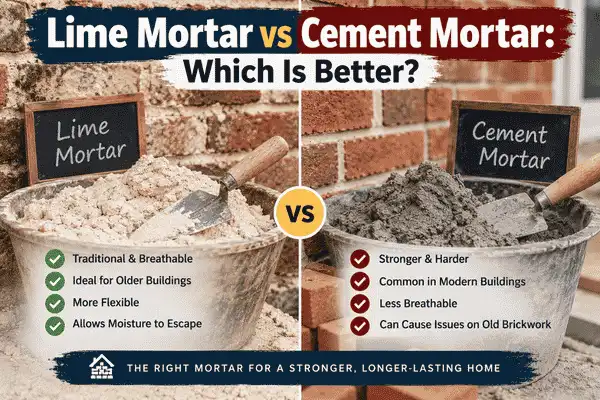
Lime mortar and cement mortar are not interchangeable. Lime mortar is usually better suited to older brick buildings because it is softer and allows moisture to escape, while cement mortar is commonly used on modern masonry. Choosing the wrong mortar can damage bricks, especially on older properties.
Lime mortar is made using lime, sand and water. It has been used in traditional brick and stone buildings for centuries.
Unlike hard cement mortar, lime mortar remains relatively flexible and allows moisture to move through the joints and evaporate.
This makes it particularly suitable for many older UK properties, including Victorian, Georgian and other traditional buildings.
Cement mortar uses cement, sand and water as its main ingredients.
It generally produces a harder and stronger mortar than traditional lime mortar. Cement-based mortar is widely used in modern construction where the bricks and building design are compatible with it.
The important point is that stronger mortar is not automatically better mortar.
The mortar should be compatible with the bricks and the construction of the building.
The biggest difference is how each mortar behaves within a brick wall.
| Feature | Lime Mortar | Cement Mortar |
|---|---|---|
| Flexibility | More flexible | Generally harder |
| Moisture movement | Allows moisture to escape | More resistant to moisture movement |
| Best suited to | Many older buildings | Many modern buildings |
| Appearance | Traditional finish | Modern finish |
| Breathability | High | Generally lower |
| Repair approach | Often requires specialist knowledge | Widely used in modern masonry |
The correct choice depends on the building rather than simply the age of the mortar.
Traditional brick walls were designed to manage moisture differently from many modern walls.
Lime mortar allows moisture to move through the joints and evaporate. The mortar can also accommodate small amounts of movement without behaving like a rigid cement joint.
Older bricks can be relatively soft. If a very hard cement mortar is used during repairs, the bricks may become the weaker part of the wall.
This can lead to cracking, spalling or surface damage over time.
Hard cement mortar can restrict the movement of moisture through a traditional wall.
When water becomes trapped, it may contribute to deterioration of the bricks, particularly during freezing conditions.
Another problem occurs when the cement joint remains intact but the surrounding brick begins to fail.
Instead of the mortar weathering first, the softer brick can become damaged.
For this reason, replacing traditional lime mortar with a hard cement mix should not be treated as a simple upgrade.
Neither mortar is universally better. Lime mortar is often the better choice for traditional masonry, while cement mortar can be appropriate for modern buildings designed around cement-based construction.
The right mortar should match the existing brickwork, construction method and exposure conditions.
A professional assessment is particularly important when repointing an older property.
Several clues can help identify the appropriate mortar.
Consider:
A simple visual inspection can provide useful clues, but it cannot always confirm the mortar composition.
If you are unsure, ask an experienced brickwork specialist to assess the existing joints before repointing.
Using an incompatible mortar can create problems that become expensive to correct.
Potential issues include:
The problem may not appear immediately. Damage can develop gradually as the wall experiences repeated wetting, drying and freezing.
Lime mortar requires more care during preparation, application and curing.
The correct mix depends on the building and the existing masonry. Weather conditions also need to be considered because lime mortar should be protected while it cures.
This is one reason traditional repointing is best handled by someone familiar with older brickwork.
It should not be used automatically.
Some older properties have already been repaired with cement mortar, but that does not mean cement is suitable for every future repair.
Before repointing, the existing mortar and bricks should be assessed.
Where traditional lime mortar is appropriate, using a compatible lime-based mortar can help preserve the brickwork.
Many Victorian and Georgian properties were built using lime-based mortars, although construction methods vary.
For these buildings, the goal should be to match the existing construction rather than simply choose the hardest available mortar.
A specialist should assess the masonry before large-scale repointing, particularly where original bricks and mortar remain.
Cement-based mortar is commonly suitable for modern masonry, provided it is compatible with the bricks and construction system.
Modern buildings are generally designed with materials that work together, so a cement-based mortar may provide the required strength and durability.
However, the manufacturer’s specifications and the existing construction should still be considered.
Lime mortar does not automatically stop damp.
Its ability to allow moisture to evaporate can help traditional walls manage moisture more effectively. However, damp can have many causes.
Blocked gutters, roof defects, plumbing leaks, rising damp and damaged pointing can all contribute to moisture problems.
The source of damp should be identified before choosing a mortar.
One of the biggest mistakes is choosing mortar based only on strength.
Other common mistakes include:
The mortar should work with the wall, not fight against it.
Professional advice is recommended when:
A proper assessment can prevent an unsuitable repair from causing further damage.
Choosing the right mortar is an important part of successful brick repointing.
Brick Repointing Experts can assess the existing brickwork and mortar before recommending a suitable repair approach. This is particularly useful for older properties where preserving the original bricks and managing moisture are important.
The aim should be to repair the wall while maintaining compatibility with its existing construction.
Lime mortar is generally the better choice for many traditional and historic brick buildings, while cement mortar is commonly suitable for modern masonry. However, there is no universal rule.
The age, brick type, wall construction and existing mortar should all be considered.
If you are repointing an older property, do not choose mortar simply because it is harder or stronger. A compatible mortar can help protect the bricks and maintain the way the wall manages moisture.
No. Cement mortar is generally harder and stronger in compressive terms. However, strength is not the only consideration when repairing brickwork. Traditional buildings often need a softer, more flexible mortar that works with the bricks rather than placing stress on them.
Lime mortar is commonly used on older houses because it allows moisture to move through the joints and provides some flexibility. This can be important for traditional brickwork, particularly where the original bricks are softer than modern masonry products.
Yes, incompatible cement mortar can contribute to damage in softer or historic bricks. A hard mortar may remain intact while the brick faces deteriorate. This is why mortar compatibility should be considered before repointing an older building.
Sometimes, but it should not be assumed to be suitable. Modern walls are often designed around cement-based materials. The correct mortar depends on the construction, brick type and existing joints.
Lime mortar repairs can cost more when specialist preparation and skilled application are required. The total price also depends on access, wall condition, property size and the amount of repointing needed.
Its lifespan varies according to the building, exposure, workmanship and maintenance. A properly matched and well-applied lime mortar can provide long-lasting protection, but no mortar is permanent.
Not automatically. If cement mortar is causing damage or is unsuitable for the building, removal may be appropriate. However, aggressive removal can damage bricks. The condition of the masonry should be assessed before work starts.
Yes, incompatible mortar can affect how a wall handles moisture. However, damp has many possible causes. Roof leaks, defective gutters, rising damp and plumbing problems should also be investigated.