What affects the Cost of Brick Repointing?
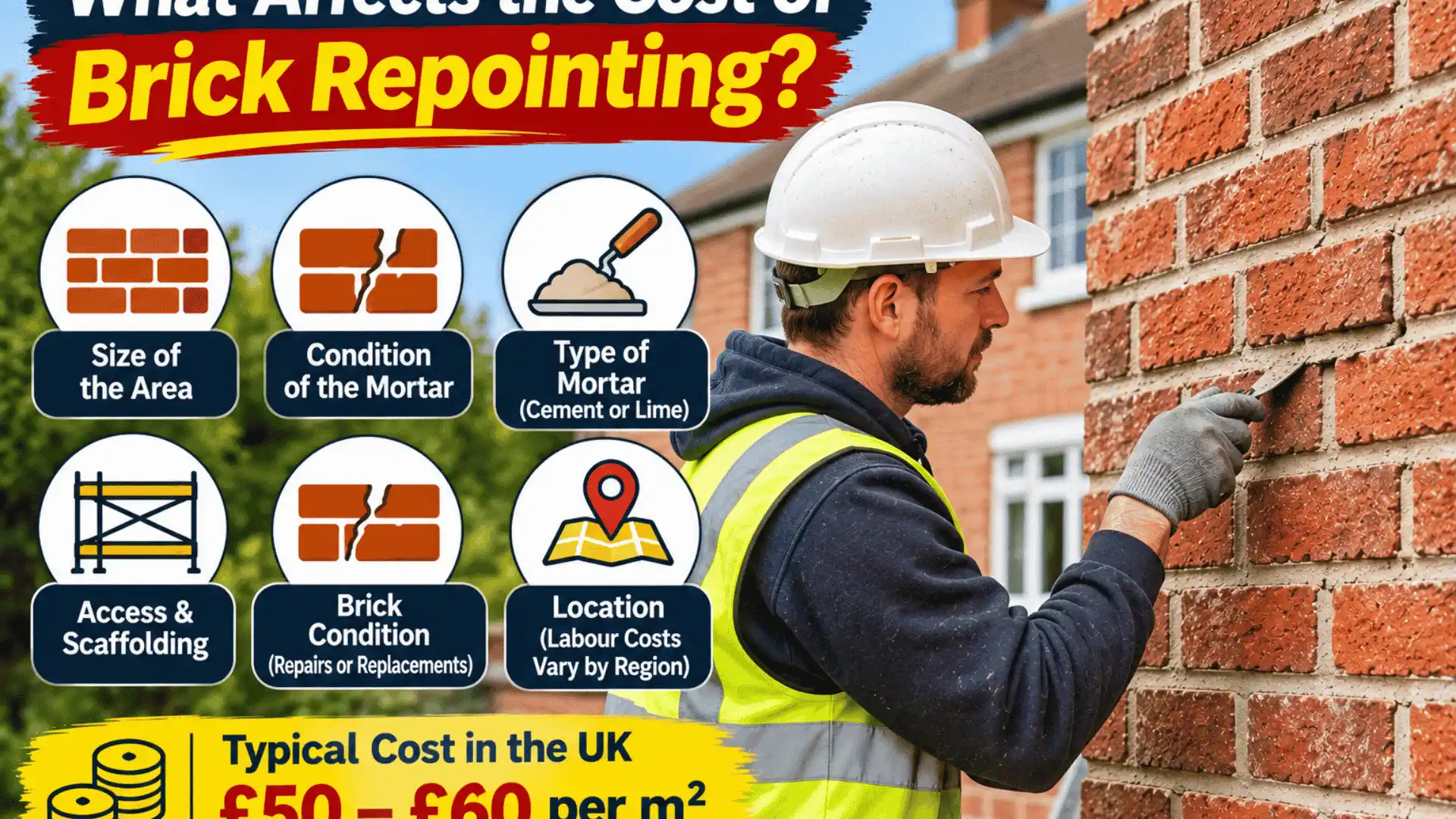
The cost of brick repointing depends on several factors, including the size of the area, the condition of the mortar, the type of mortar required, property access, labour, and whether additional repairs are needed. In the UK, standard brick repointing commonly costs around £50 to £60 per square metre, but complex projects can cost more.
Every building is different.
A modern house with easy access is quicker to repoint than a Victorian property with deteriorated lime mortar and multiple chimneys. Contractors assess several factors before preparing a quotation to ensure the repair method matches the condition of the brickwork.
The total wall area is one of the biggest pricing factors.
More brickwork means:
Larger projects often reduce the average cost per square metre because setup costs are spread across a bigger area.
Removing old mortar is one of the most labour-intensive parts of repointing.
If the joints are:
the preparation takes considerably longer, increasing labour costs. Superior Build & Landscape
Using the correct mortar is essential.
Most modern properties use cement mortar.
Older homes built before the early 20th century often require lime mortar because it allows moisture to escape naturally and reduces stress on historic brickwork.
Lime mortar generally costs more because:
Using the wrong mortar may trap moisture and damage bricks over time.
Easy ground-level walls cost less to repair than high elevations.
Additional access equipment may include:
For many projects, scaffolding represents one of the largest parts of the overall quotation.
Repointing only repairs mortar.
If inspections identify damaged bricks, these usually need replacing before new mortar is installed.
Common problems include:
Additional brick replacement increases both labour and material costs.
Different pointing finishes require different levels of skill.
Common styles include:
Decorative finishes usually take longer to complete than standard flush joints.
Labour costs vary by region.
Properties in London and the South East generally have higher labour and scaffolding costs than many parts of Northern England, Wales, or Scotland.
Mortar should not be applied during freezing temperatures or extremely hot weather.
Poor weather can:
Experienced contractors schedule repointing during suitable weather conditions whenever possible.
Yes. During repointing, contractors often discover other issues requiring attention.
Examples include:
Completing these repairs during the same project is often more cost-effective than arranging separate visits.
Yes. A significantly cheaper quote may indicate:
Poor-quality repointing can fail prematurely and may lead to moisture penetration or damaged brickwork.
Choosing an experienced contractor often provides better long-term value than selecting the lowest price alone.
Regular maintenance helps prevent extensive repairs.
Simple steps include:
Preventative maintenance usually costs much less than rebuilding damaged masonry.
Brick Repointing Experts assess your property before providing a quotation. They inspect the condition of the mortar, brickwork, access requirements, and any additional repairs needed. Depending on the findings, services may include brick repointing, house repointing, chimney repointing, brick replacement, crack repairs, or lime mortar repointing. This approach helps ensure repairs are appropriate for the property’s age and condition.
Access and preparation usually have the greatest impact. Scaffolding, removing old mortar, and the condition of the existing brickwork often account for a significant part of the total price.
Yes. Lime mortar is generally more expensive because it requires specialist materials and more time to apply correctly. It is commonly recommended for older and historic buildings.
Yes. Projects above ground level often require scaffolding, which can represent a substantial portion of the overall cost. JobPrices
Yes. Brick replacement is usually priced separately because repointing only repairs the mortar joints.
Yes. Repairing isolated areas of damaged mortar early often prevents water penetration and reduces the need for larger repairs later.
Brick repointing costs are influenced by much more than the size of the wall. Mortar type, access, labour, brick condition, property age, and additional repairs all contribute to the final quotation. Understanding these factors allows homeowners to compare quotes more effectively and choose repairs that provide lasting value. Investing in high-quality workmanship and the correct materials helps protect brickwork from moisture, weather damage, and unnecessary future repair costs.