What Happens If You Don’t Repoint Brickwork?
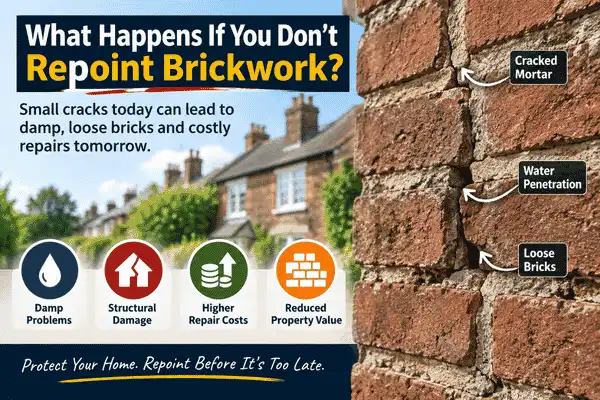
Ignoring damaged mortar can allow water to enter your brickwork, leading to damp, loose bricks, frost damage, and more expensive repairs over time. Repointing restores the mortar joints before these problems become more serious and helps protect the structure and appearance of your property.
Mortar joints naturally wear down over time. Rain, frost, wind, and changing temperatures slowly weaken the material between the bricks.
Many homeowners notice cracked or missing mortar but delay repairs because the wall still appears stable.
Unfortunately, damaged mortar rarely improves on its own. Small defects usually become larger as the weather continues to affect the wall.
Understanding the risks of delaying repointing can help you avoid unnecessary repair costs in the future.
Mortar does much more than hold bricks together.
It helps:
When mortar begins to fail, the bricks lose much of this protection.
Mortar gradually breaks down through normal weathering.
Common causes include:
Older properties often experience natural mortar wear after many years of exposure.
Early warning signs are usually easy to spot if you inspect your property regularly.
Look for:
Repairing these problems early is usually simpler than waiting until extensive damage develops.
The earliest problem is usually water penetration.
Small cracks in mortar allow rainwater to enter the wall.
During dry weather this may not be obvious.
However, repeated rainfall gradually increases the amount of moisture entering the brickwork.
Over time, this moisture can affect both the external wall and the inside of the property.
Yes.
One of the most common consequences of failing mortar is penetrating damp.
When rainwater enters through open joints, moisture can travel into the wall.
This may eventually cause:
Repointing helps restore the wall’s resistance to rainwater by sealing damaged mortar joints.
Yes.
Mortar helps keep bricks securely bonded together.
As joints continue to deteriorate, individual bricks may begin to move slightly.
Loose bricks increase the risk of further cracking and can eventually require brick replacement as well as repointing.
Absolutely.
The UK’s weather creates repeated freeze-thaw cycles.
Here’s what happens:
This cycle repeats throughout winter and gradually accelerates deterioration.
Yes.
Mortar is designed to protect the surrounding brickwork.
When joints fail, the bricks become more exposed to moisture and weather.
Over time this can lead to:
Replacing damaged mortar early often helps preserve the original bricks.
Yes.
Many homeowners ignore small areas because they appear insignificant.
Unfortunately, weather rarely leaves them unchanged.
A small crack can gradually spread across larger sections of the wall.
What could have been a straightforward repair may eventually require:
Early maintenance is usually the most cost-effective option.
In many situations, yes.
Replacing deteriorated mortar before significant brick damage occurs is generally much less disruptive than repairing or rebuilding damaged masonry.
Delaying maintenance often increases both the amount of labour and the number of repairs required.
Older buildings benefit from regular inspections because their mortar has often been exposed to decades of weather.
Properties built using traditional lime mortar naturally require occasional maintenance as part of preserving the original brickwork.
An annual visual inspection can help identify small problems before they become costly structural repairs.
Yes, although it usually happens gradually rather than suddenly.
As mortar continues to deteriorate, bricks lose the support that keeps the wall stable. Water entering the joints can weaken the masonry over time, increasing the likelihood of larger repairs.
Most walls do not become unsafe overnight, but delaying maintenance allows the damage to spread.
Yes.
Small areas of missing mortar are generally quicker and less expensive to repair than widespread deterioration.
If damaged joints are ignored, additional work may eventually be needed, such as:
Addressing the problem early often reduces the overall cost of repairs.
Poorly maintained brickwork can affect a property’s appearance and may concern potential buyers.
During a property survey, visible defects such as cracked mortar, loose bricks, or damp may be highlighted as maintenance issues.
Keeping brickwork in good condition helps protect both the appearance and long-term value of your home.
It can become one if left untreated.
As mortar continues to fail, individual bricks may loosen, particularly around:
Loose masonry can create safety concerns and should be inspected promptly.
Yes.
Once water begins entering damaged joints, repeated rainfall keeps the wall damp for longer.
Moisture can gradually affect:
Repairing the mortar helps reduce the route through which rainwater enters the wall.
Many brickwork problems become worse because repairs are delayed.
Common mistakes include:
Loose bricks often indicate that the mortar has already deteriorated significantly.
Paint may hide the problem, but it does not repair damaged mortar.
Water can continue entering behind the surface.
Even a few damaged joints can allow water into the wall.
Small repairs are often much simpler than extensive restoration.
The replacement mortar should match the building.
Older properties often require lime mortar rather than hard cement mortar.
Low-cost repairs may not include proper preparation or compatible materials.
Quality workmanship usually provides better long-term value.
Regular maintenance is the best approach.
Simple steps include:
Preventive maintenance usually costs less than repairing extensive damage.
Arrange an inspection if you notice:
An inspection helps determine whether local repairs are sufficient or whether larger sections require repointing.
Not all brickwork needs complete repointing.
Brick Repointing Experts inspect the condition of your mortar, identify the cause of deterioration, and recommend the most suitable repair for your property. Whether you need localised mortar repairs, chimney repointing, or more extensive brick restoration, using compatible materials and careful workmanship helps protect your home from future damage.
Related services include:
These simple measures can significantly extend the life of your brickwork.
Damaged mortar should never be ignored. While small cracks may seem minor, they allow rainwater to enter the wall and can gradually lead to damp, brick damage, loose masonry, and more expensive repairs. Acting early is one of the most effective ways to protect your property.
Professional brick repointing restores the mortar joints, improves weather resistance, and helps preserve the strength and appearance of your brickwork. Regular inspections and timely maintenance can prevent many common masonry problems before they become major issues.
If you notice crumbling mortar, damp after heavy rain, or visible gaps between bricks, Brick Repointing Experts can inspect your property and recommend the most appropriate repair solution. Addressing the problem early helps protect your home, reduce future repair costs, and extend the life of your brickwork.
Common signs include cracked or missing mortar, loose bricks, damp patches after rain, white salt deposits, moss growing between bricks, and mortar that crumbles when touched. If you notice any of these problems, arrange a professional inspection before the damage becomes more extensive.
Yes. Damaged mortar joints allow rainwater to penetrate the brickwork. Over time, this moisture can travel through the wall and cause damp patches, peeling paint, mould growth, and damaged plaster. Repointing can help stop penetrating damp when deteriorated mortar is the source of the problem.
Cracked mortar usually gets worse over time. Water enters the joints, freeze-thaw cycles enlarge the cracks, and more mortar falls away. Eventually, bricks may loosen, and repairs become more extensive and expensive.
Yes. Mortar helps hold bricks together and distributes loads throughout the wall. As it deteriorates, the wall becomes more vulnerable to movement and weather damage. In severe cases, sections of masonry may require rebuilding instead of simple repointing.
Repointing can stop water entering through damaged mortar joints. However, it will not solve leaks caused by defective roofs, blocked gutters, damaged flashing, plumbing issues, or rising damp. Identifying the source of the moisture is always the first step.
In many cases, yes. Repointing repairs deteriorated mortar before significant brick damage occurs. Rebuilding usually becomes necessary only when the brickwork has been badly affected or has become structurally unstable.
Poor brickwork may reduce kerb appeal and raise concerns during a property survey. Keeping mortar joints in good condition helps maintain the appearance of the property and demonstrates that it has been properly maintained.
A visual inspection once a year is recommended, especially after winter or prolonged periods of heavy rain. Regular inspections help identify small defects before they require more extensive repairs.
Small repairs on low garden walls may be possible for experienced DIY enthusiasts. However, repointing a house requires suitable tools, compatible mortar, and correct techniques. Poor repairs can trap moisture or damage the surrounding brickwork.
Many traditional UK homes were originally built using lime mortar. Matching the replacement mortar to the existing construction helps protect older bricks and allows the wall to manage moisture as intended. A professional assessment is recommended before starting work.