Why Mortar Cracks Between Bricks
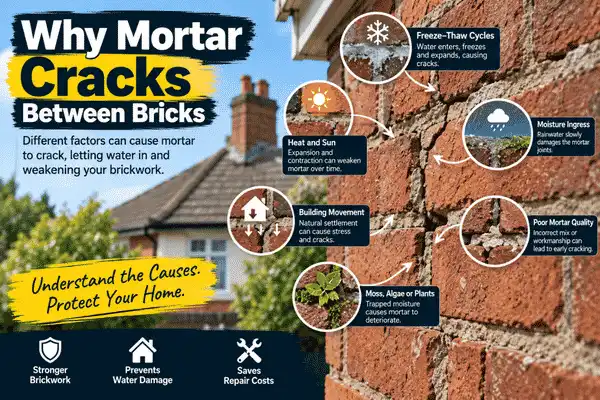
Mortar cracks between bricks because of weather exposure, moisture, natural building movement, ageing, or poor workmanship. While small cracks may seem harmless, they can allow water into the brickwork, leading to damp, loose bricks, and more costly repairs if left untreated.
Mortar is designed to hold bricks together while allowing slight movement within a wall. Over time, constant exposure to rain, frost, sunlight, and temperature changes causes the mortar to weaken and crack.
Most mortar deteriorates before the bricks themselves, which is why repointing is a common maintenance task for brick buildings.
Rain, wind, and changing temperatures gradually wear away mortar joints. Properties exposed to harsh weather often experience faster deterioration.
Water enters small cracks in the mortar. When temperatures drop below freezing, the water expands as it freezes, making the cracks larger.
Repeated freeze-thaw cycles can significantly weaken mortar over time.
Buildings naturally expand, contract, and settle.
This slight movement can create stress on mortar joints, particularly around windows, doors, chimneys, and extensions.
Even well-built brickwork requires maintenance.
Older mortar gradually loses strength after years of exposure to the elements.
Using the wrong type of mortar or poor repointing techniques can cause mortar to crack earlier than expected.
Older properties often require lime mortar rather than modern cement mortar.
Blocked gutters, leaking roofs, or damaged flashing can keep brickwork wet for long periods, accelerating mortar deterioration.
Moss, weeds, and climbing plants trap moisture against the wall. Their roots can also widen small cracks in mortar joints.
Look for these warning signs:
If several of these signs are present, the wall should be inspected by a professional.
Small cracks do not usually affect the structure immediately.
However, if water continues to enter the wall, the damage can spread and eventually weaken the brickwork. Loose bricks, frost damage, and larger areas of failing mortar may develop over time.
Early repairs help prevent more serious problems.
Yes.
In most cases, damaged mortar can be repaired through brick repointing.
The old mortar is carefully removed and replaced with fresh mortar that matches the property’s age and construction.
If the bricks themselves are damaged, brick replacement may also be required.
Good maintenance helps extend the life of your brickwork.
Brick Repointing Experts inspect damaged mortar, identify the cause of cracking, and recommend the most suitable repair solution. Whether your property needs brick repointing, crack repairs, chimney repointing, or lime mortar repointing, timely maintenance helps protect your home from water damage and extends the life of your brickwork.
Cracked mortar is a common issue that should not be ignored. Weather exposure, moisture, ageing, and natural building movement are the main causes of mortar deterioration. By identifying the problem early and repairing damaged joints promptly, you can prevent water penetration, protect your brickwork, and avoid more extensive repairs in the future.
Yes. Small cracks can develop as mortar ages. However, they should be monitored because they may allow water into the wall.
Not always. Small isolated areas may only require local repairs, while widespread deterioration usually requires repointing.
Yes. Damaged mortar allows rainwater to penetrate brickwork, which may lead to damp inside the property.
New mortar can crack if it dries too quickly, freezes before curing, or has been mixed incorrectly.
Yes. Repairing mortar before freezing weather helps reduce the risk of frost damage and water penetration.