Can Pressure Washing Damage Bricks?
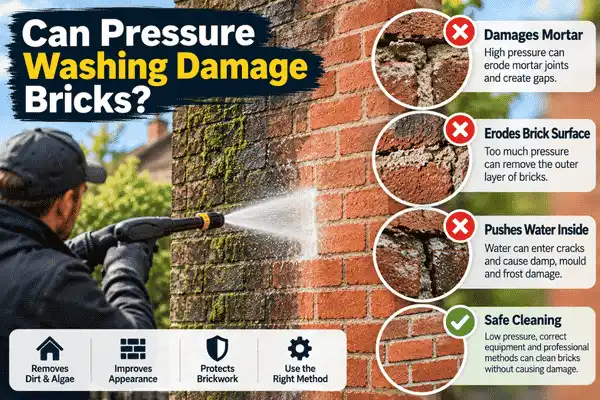
Yes, pressure washing can damage bricks if the pressure is too high or the wrong cleaning method is used. It can erode mortar joints, remove the protective surface of bricks, force water into the wall, and shorten the life of your brickwork. Older properties and historic buildings are particularly vulnerable.
Pressure washing is often used to remove:
When carried out correctly, it can improve the appearance of brickwork. However, incorrect cleaning can cause expensive damage.
Mortar is usually softer than bricks. High-pressure water can wash away mortar, creating gaps that allow rainwater to enter the wall.
If mortar is already cracked or deteriorating, pressure washing can make the problem worse.
Many bricks have a hard outer surface that protects them from the weather.
Excessive pressure can remove this protective layer, making bricks more likely to absorb water and suffer frost damage.
High-pressure water can penetrate cracks, damaged mortar joints, and small gaps.
This may lead to:
Older buildings often use softer handmade bricks and lime mortar.
These materials are much more delicate than modern brickwork and should be cleaned using gentle methods.
Extra care should be taken with:
These structures can be damaged more easily by high-pressure cleaning.
Pressure washing may be suitable when:
Every property should be assessed before cleaning begins.
Depending on the condition of the brickwork, safer cleaning methods include:
The best method depends on the age, condition, and type of brick.
Look for these warning signs:
If these signs appear after cleaning, the brickwork should be inspected.
Before pressure washing, always check:
If the mortar is damaged, repairs should usually be completed before cleaning.
Brick Repointing Experts inspect brickwork before cleaning to identify damaged mortar, loose bricks, and other defects. If repairs are needed, services such as brick repointing, brickwork repairs, lime mortar repointing, or brick restoration can help protect the wall before any cleaning takes place.
Yes. High-pressure water can erode mortar joints, especially if the mortar is old or already damaged.
Not always. Older properties often contain softer bricks and lime mortar, which are more likely to be damaged by high-pressure cleaning.
Yes. Water forced into cracks or damaged joints can lead to penetrating damp and internal moisture problems.
Soft washing, low-pressure cleaning, or steam cleaning are often safer options, particularly for older properties.
Yes. Damaged mortar and loose bricks should be repaired first to reduce the risk of further deterioration during cleaning.