What Causes Bricks to Crack?
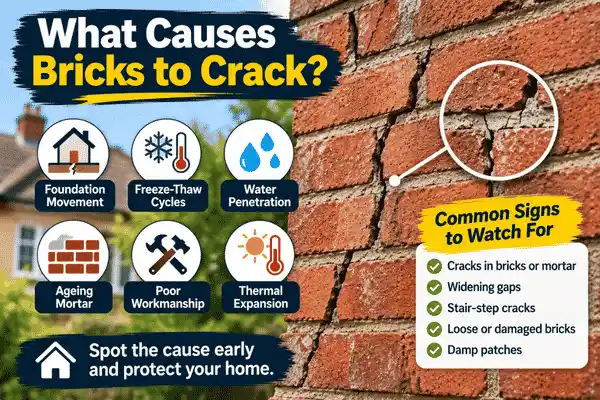
Bricks can crack because of foundation movement, moisture, freeze-thaw cycles, ageing mortar, thermal expansion, poor workmanship, or excessive structural loads. While some hairline cracks are harmless, wider or growing cracks may indicate an underlying problem that requires professional attention. Identifying the cause is the first step towards choosing the correct repair.
Bricks are strong building materials, but they are not immune to movement and weathering. Every building expands, contracts, settles, and responds to changing weather conditions throughout its life.
Most brick cracks develop because the wall is under stress or because water has weakened the masonry over time. In many cases, the crack itself is only a symptom of a larger issue rather than the actual problem. National Park Service
One of the most common reasons for cracked brickwork is movement beneath the building.
This may happen because of:
When foundations move unevenly, the brickwork above can develop vertical, horizontal, or stepped cracks. National Park Service
Bricks naturally absorb small amounts of water.
When temperatures fall below freezing, the trapped water expands by around 9% as it turns to ice. Repeated freeze-thaw cycles create internal pressure that can crack bricks, damage mortar, and cause surface spalling. Office of Research Facilities
Water is one of the biggest causes of brick deterioration.
Moisture entering through damaged mortar, defective flashing, blocked gutters, or leaking roofs can gradually weaken brickwork. Persistent saturation increases the risk of frost damage, salt deposits, and surface deterioration. BDA
Buildings move slightly throughout the year as temperatures and moisture levels change.
This natural expansion and contraction can place stress on brickwork, particularly around:
Small movement cracks are common, but widening cracks should always be investigated. NHBC
Mortar generally deteriorates before bricks.
As mortar weakens, it can no longer distribute loads evenly between the bricks. This increases stress on individual bricks and may eventually cause cracking.
Regular repointing helps maintain the strength of masonry walls. Engine Shed
Using the wrong mortar can create new problems.
Historic buildings built with lime mortar should usually be repaired using compatible lime-based materials. Hard cement mortar can trap moisture, increase stress within the wall, and contribute to brick damage. Engine Shed
Additional loads placed on walls during alterations or extensions can increase stress on brickwork.
Improperly supported openings, failed lintels, or structural changes may also lead to cracking. National Park Service
No. Many small hairline cracks result from normal movement and do not affect structural safety.
However, professional assessment is recommended if you notice:
These symptoms may indicate structural movement rather than cosmetic damage. National Park Service
Although not every crack can be prevented, regular maintenance significantly reduces the risk.
Good practice includes:
These steps help reduce moisture-related damage and extend the life of brickwork. NHBC Prod
The correct repair depends on the cause.
Common solutions include:
Repairing the visible crack without addressing the underlying cause often leads to the problem returning.
Brick Repointing Experts inspect cracked brickwork to determine whether the problem is caused by failing mortar, moisture, weathering, or structural movement. Depending on the findings, suitable solutions may include brick repointing, brick replacement, crack repairs, chimney repointing, or lime mortar repointing, ensuring repairs match the condition and age of the property.
Bricks commonly crack because of natural building movement, moisture, ageing mortar, freeze-thaw cycles, or foundation movement. Regular maintenance helps reduce the risk of serious damage.
Yes. Depending on the cause, repairs may include repointing, replacing damaged bricks, improving drainage, or carrying out structural repairs.
Small hairline cracks are often caused by natural movement or temperature changes. However, cracks that widen or spread should be professionally inspected.
Yes. Water entering bricks can freeze during cold weather, creating internal pressure that leads to cracking and surface damage. Office of Research Facilities
Not always. A professional inspection can determine whether the brick needs replacing or whether repairing the surrounding mortar is enough.
Cracked bricks are often the result of moisture, natural building movement, deteriorating mortar, or foundation issues. While some minor cracks are cosmetic, larger or expanding cracks should never be ignored. Regular inspections, timely maintenance, and repairing the underlying cause rather than just the visible crack help protect your property and extend the life of its brickwork.