How Much Does House Repointing Cost?
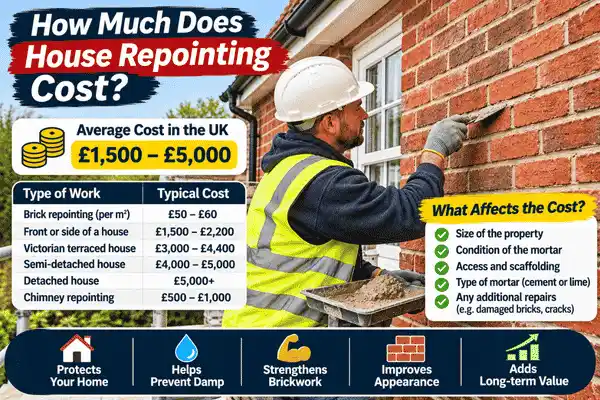
House repointing in the UK typically costs between £1,500 and £5,000 for most homes, while larger detached or period properties can cost more. The final price depends on the size of the property, the amount of brickwork, the type of mortar, access requirements, and whether scaffolding or additional repairs are needed.
No two homes require exactly the same amount of work.
A small front wall with minor mortar damage costs far less than repointing an entire detached house. The age of the property, mortar type, and ease of access all influence the final quotation.
The table below shows typical UK price ranges.
| Type of Work | Typical Cost |
|---|---|
| Brick repointing | £50–£60 per m² |
| Front or side of a house | £1,500–£2,200 |
| Victorian terraced house | £3,000–£4,400 |
| Semi-detached house | £4,000–£5,000 |
| Detached house | £5,000+ depending on size |
| Chimney repointing | £500–£1,000 |
| Scaffolding | Usually charged separately |
These are guide prices only. A site survey provides the most accurate quotation.
Larger houses contain more brickwork and mortar joints, increasing both labour and material costs.
If the existing mortar is badly damaged, contractors must spend more time removing it before new mortar can be applied.
Walls above ground level often require scaffolding or specialist access equipment, which can significantly increase the overall cost.
Modern homes often use cement mortar, while older buildings frequently require lime mortar.
Lime mortar generally costs more because it requires specialist materials and skills. Using the correct mortar is important to protect older brickwork.
During the inspection, contractors may also identify:
Completing these repairs at the same time often reduces future maintenance costs.
In many cases, yes.
Repointing helps protect brickwork from rain, frost, and moisture while extending the life of your property.
It can also:
Repairing damaged mortar early is usually far more affordable than replacing damaged brickwork later.
Yes.
As mortar continues to deteriorate, water enters the wall through open joints.
Over time, this can lead to:
Small repairs today can often prevent much larger expenses in the future.
You cannot avoid normal ageing, but regular maintenance helps reduce future repair bills.
Good practice includes:
Brick Repointing Experts inspect your property to determine the condition of the mortar and brickwork before recommending the most suitable repair. Depending on the findings, services may include house repointing, brick repointing, chimney repointing, brick replacement, crack repairs, or lime mortar repointing. Matching the correct materials to your property helps provide durable, long-lasting results.
Most homeowners spend between £1,500 and £5,000, although the final cost depends on property size, access, and the condition of the existing mortar. Checkatrade
Yes. Repointing replaces damaged mortar while keeping the existing bricks. Rebuilding involves replacing sections of brickwork and is usually much more expensive.
Yes. For two-storey properties and difficult-to-access walls, scaffolding is often one of the largest additional costs.
Most houses take several days to around one week, depending on the property’s size, weather conditions, and the amount of brickwork requiring repair.
In most cases, routine repointing is considered maintenance and is not covered by standard home insurance policies. Damage caused by an insured event may be treated differently, depending on the policy.
House repointing is an important investment in the long-term condition of your property. Although costs vary depending on the size of the home, access, and mortar type, repairing deteriorated joints early helps prevent damp, brick damage, and more expensive structural repairs. A professional inspection and detailed quotation will help you understand exactly what work is needed and ensure the right repair method is used.