Signs Your House Needs Brick Repointing
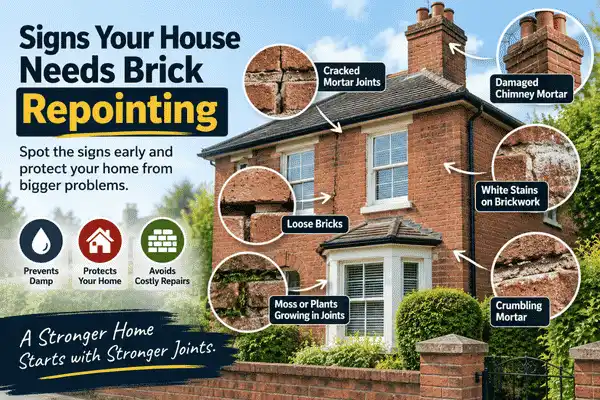
Cracked mortar, loose bricks, damp patches, and gaps between bricks are common signs that your house needs brick repointing. Repairing damaged mortar early helps prevent water penetration, protects your brickwork, and helps you avoid more expensive repairs in the future.
Mortar is the material that holds bricks together and seals the gaps between them. It protects your home from rain, frost, wind, and moisture while helping the brickwork remain stable.
Over time, mortar naturally wears away due to weather exposure. If damaged joints are left untreated, water can enter the wall and lead to more serious problems.
Fine cracks are often the first indication that mortar is beginning to fail. Although they may appear small, they allow rainwater to enter the wall and usually become worse over time.
If mortar is falling out or gaps have formed between the bricks, your wall is no longer properly protected. Repointing restores these joints before further damage occurs.
Damaged mortar can allow rainwater to penetrate external walls.
This may result in:
If failing mortar is the cause, repointing helps improve the wall’s resistance to moisture.
Bricks depend on mortar for support. As mortar deteriorates, individual bricks may begin to move or become loose.
Repairing the mortar early helps prevent additional structural damage.
White powdery deposits, known as efflorescence, appear when moisture carries salts to the surface of the brickwork.
Although the deposits are usually harmless, they often indicate excess moisture within the wall.
Finding pieces of mortar around the base of your property is a clear sign that the joints are breaking down and should be inspected.
Moss, weeds, or other vegetation growing in mortar joints often indicate trapped moisture and deteriorating mortar.
Chimneys are exposed to wind, rain, and frost throughout the year.
Cracked or missing mortar around a chimney should be repaired promptly to prevent further deterioration.
A simple visual inspection once or twice a year can help identify problems before they become serious.
Look for:
You don’t need specialist equipment to spot many of these warning signs.
Ignoring damaged mortar can lead to more extensive repairs over time.
Common consequences include:
Repairing damaged mortar early is usually much more affordable than waiting until the brickwork has deteriorated further.
Arrange a professional inspection if you notice:
An experienced contractor can determine whether a small repair is enough or if larger sections require repointing.
At Brick Repointing Experts, we inspect your brickwork, assess the condition of the mortar joints, and recommend the most appropriate repair for your property.
Our services include:
Using suitable materials and proven techniques helps extend the life of your brickwork while protecting your property from further damage.
Damaged mortar should never be ignored. Cracked joints, loose bricks, damp patches, and crumbling mortar are all signs that your brickwork needs attention. Identifying these problems early can prevent water damage, preserve the strength of your walls, and reduce future repair costs.
If you’ve noticed any of these warning signs, arranging a professional inspection is the best next step. Timely brick repointing helps protect your home, extends the life of your brickwork, and keeps your property in good condition for years to come.
Common signs include cracked or missing mortar, loose bricks, damp patches, white staining, and mortar falling from the joints. A professional inspection can confirm whether repointing is required.
Yes. Damaged mortar allows rainwater to enter the wall, which can eventually lead to penetrating damp and internal moisture problems.
The cost depends on the size of the property, the condition of the mortar, and access to the affected areas. Repairing problems early is generally less expensive than delaying maintenance.
Inspect your brickwork at least once a year and after periods of severe weather. Regular inspections help identify small problems before they become larger repairs.
Small repairs may be suitable for experienced DIY enthusiasts. However, repointing a house requires the correct tools, suitable mortar, and proper techniques. Professional workmanship usually provides a more durable result.